research and Publications
Integrating Blue-Green-Grey Network
Khan N., Mowla Q.A., Tariquzzaman Md., Tabassum N. (2021), Integrating Blue-Green-Grey Open Space Network: Sustainable Urban Design Approach for Climate Change Resilience, Journal of Architecture (JA), Vol 18, Issue 01, pp 53-69, January 2021, ISSN : 2789-4193 (Online), ISSN 2789-4186
Scientific Study Of Dying Rivers For Societal Benefits
Tabassum N., Das S., Ghosh M. (2020), Scientific Study of Dying Rivers for Societal Benefits: A Comparative Analysis of two rivers in two South Asian Countries, International Journal of Scientific & Technology Research (IJSTR), Vol 9, Issue 01, pp 3326-3331, January 2020 edition, ISSN- 2277-8616.
Future Architects’ Challenges: Bangladesh Perspective
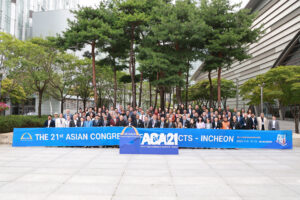
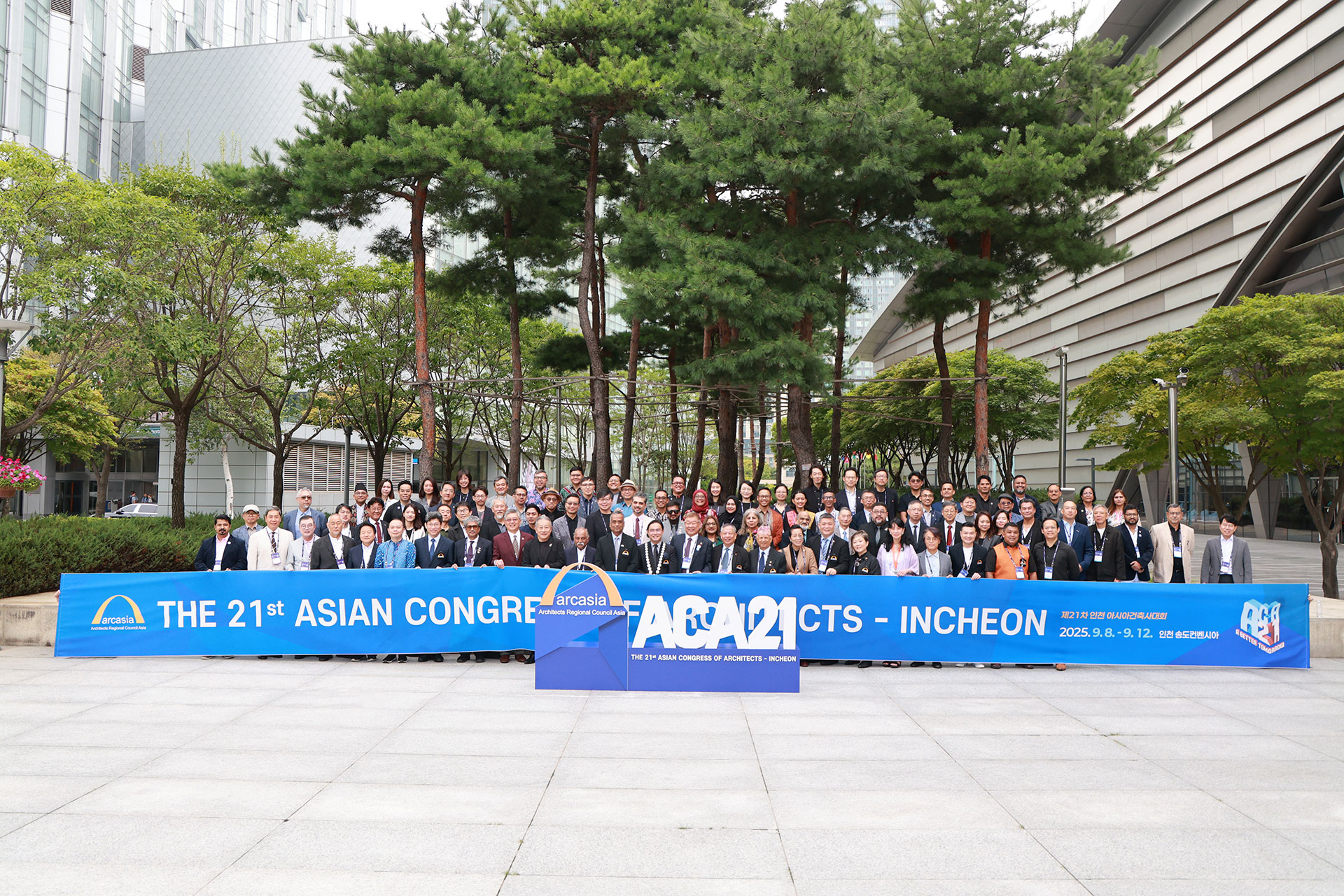
Hossain, Md. M., Tabassum, N., (2025), Future Architects’ Challenges: Bangladesh Perspective, 45th meeting of Arcasia Committee on Architectural Education [ACAE], 21st Asian Congress of Architects (ACA21), 8-12 September 2025, Incheon, South Korea, Organised by Architects Regional Council Asia (ARCASIA).
(a) Journal Publications (recognized and refereed journals/proceedings):
- Khan N., Mowla Q.A., Tariquzzaman Md., Tabassum N. (2021), Integrating Blue-Green-Grey Open Space Network: Sustainable Urban Design Approach for Climate Change Resilience, Journal of Architecture (JA), Vol 18, Issue 01, pp 53-69, January 2021, ISSN : 2789-4193 (Online), ISSN 2789-4186 (Print)
- Tabassum N., Das S., Ghosh M. (2020), Scientific Study of Dying Rivers for Societal Benefits: A Comparative Analysis of two rivers in two South Asian Countries, International Journal of Scientific & Technology Research (IJSTR), Vol 9, Issue 01, pp 3326-3331, January 2020 edition, ISSN- 2277-8616.
- Tabassum N., Khan N.( 2026), Open Spaces As Urban Sponges: Low-Impact Development Strategies For Waterlogging Resilience In Dhaka, Bangladesh (Ongoing for Journal)
- Khan S.N., Naz A., Tabassum N.( 2026), Generative Design of a Trauma-Informed Transitional Shelter Community Module System for High-Density Urban Areas (Ongoing for Journal)
(b) Conferences (national and international conferences and seminars):
(i) Proceedings
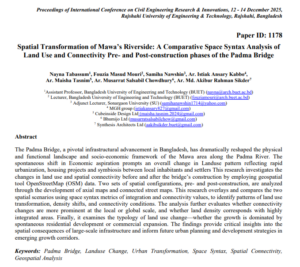
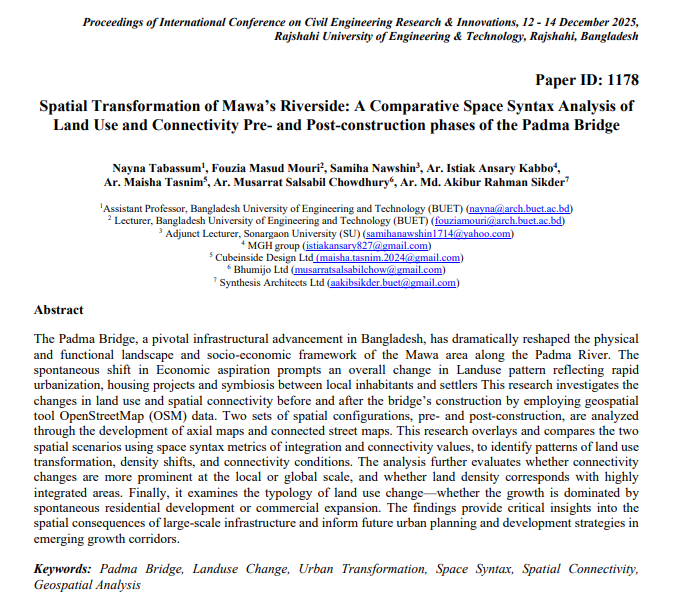
- Tabassum N., Mouri FM., Nawshin S., Kabbo IA., Tasnim M., Chowdhury MS., Sikder MAR., (2025), “Spatial Transformation of Mawa’s Riverside: A Comparative Space Syntax Analysis of Land Use and Connectivity Pre-and Post-construction phases of the Padma Bridge”, Proceedings of International Conference on Civil Engineering Research & Innovations(ICCEI 2025), Rajshahi University of Engineering & Technology, Rajshahi, Bangladesh, Vol. 12, 2428-2433
- Tabassum N., Roy S. (2018), Present Trends in Income and its Impact on Affordability of Multi- Ownership Housing, Samarawickrama, Sumanthri, et al (eds), 2018, “Sustainability for people – envisaging multi-disciplinary solution” : Proceedings of the 11th International Conference of Faculty of Architecture Research Unit (FARU), University of Moratuwa, Sri Lanka, December 2018, pp. 155– 164, ISBN 978-955-9027-74-4
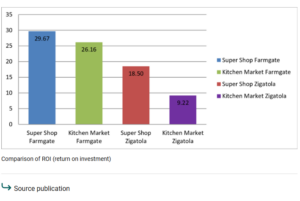
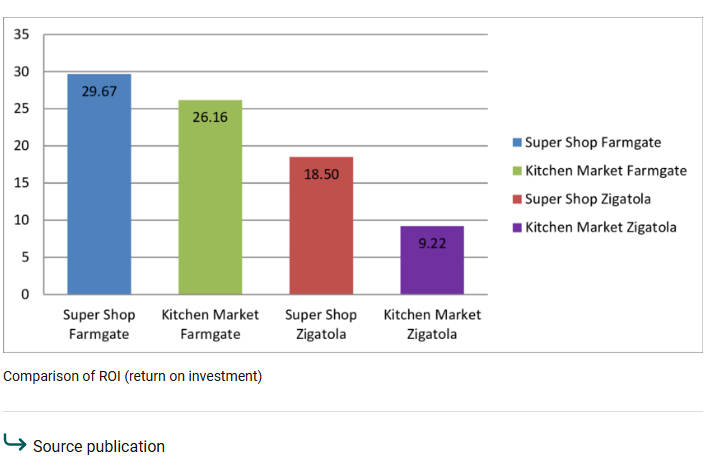
- Tabassum N., Parvez P.A. (2017), Comparative Analysis between Urban Kitchen Market and Super-shops – focus on Proper Return on Investment (ROI) in sense of Spatial Utilization in the context of Dhaka, Bangladesh, Urbanization Futures-policies, Strategies and Implications of Densification of Cities, Proceedings of fifth International Urban Design Conference on Cities, People and Places, ICCPP-2017, Colombo, Sri-Lanka, October 2017, pp 95-118, ISBN : 2345-9530.
- Sikder M.A.R., Tabassum N. (2026), Kodifying Khatunganj: A Multilayered Approach to Wholesale Trade Revival, 4th International Conference on Green Architecture, ICGrA 2026, Sylhet Bangladesh (Ongoing).
- Mumu M.T., Tabassum N., Naz A. (2026), Climate-Responsive Modular Habitats for Rescued Cats and Dogs in Dhaka: A Design-Based Research Approach, 4th International Conference on Green Architecture, ICGrA 2026, Sylhet Bangladesh (Ongoing)
- Talukder S., Tabassum N., Tariquzzaman Md. (2026), Echoes of Resistance: Reimagining The Historic Axis Of Shahbag–Tsc–Shaheed Minar As A Civic Spine, 4th International Conference on Green Architecture, ICGrA 2026, Sylhet Bangladesh (Ongoing)
- Tabassum N. (2026), Foundation or Professional? Comparing Undergraduate Architecture Education in BUET and International Architecture Programmes (Ongoing)
(ii) Presentations
- Tabassum N., Anik S.A.(2026), Architectural Education in Transition: Teaching, Technology, and Tomorrow, Round Table Discussion, Institute of Architects Bangladesh (IAB), 10 August 2026 , Dhaka, Bangladesh.
- Tabassum N., Shahriar M. Munawar T. (2025), Mapping Urban Risks in Dhaka : Policy Insights from Detail Area Plan, Risk Sensitive Urban Design Sub-Committee, Environment and Urbanization Committee, Seminar on World Architecture Day 2025 and World Habitat Day 2025, Institute of Architects Bangladesh (IAB).
- Tabassum N., Shahriar M. Munawar T. (2025), ঢাকায় নগর ঝুঁকির মানচিত্রায়ন : বিশদ অঞ্চল পরিকল্পনা (ড্যাপ)-এর নীতিনির্ধারণমূলক বিশ্লেষণ (Mapping Urban Risks in Dhaka: A Policy-Oriented Analysis of the Detailed Area Plan (DAP)), Seminar on World Urban Forum 2025, November 2025, Institute of Architects Bangladesh (IAB).
- Hossain, Md. M., Tabassum, N., (2025), Future Architects’ Challenges: Bangladesh Perspective, 45th meeting of Arcasia Committee on Architectural Education [ACAE], 21st Asian Congress of Architects (ACA21), 8-12 September 2025, Incheon, South Korea, Organised by Architects Regional Council Asia (ARCASIA).
- Fatemi, N., Tabassum, N., (2023), Weaving a Future-Ready Environment, Country Report Presentation 2022-2023 from Institute of Architects Bangladesh (IAB), 43rd meeting of Arcasia Committee on Architectural Education [ACAE], 20tht Asian Congress of Architects (ACA20), 18-22 September 2023, Boracay, Phillipines, organized by Architects Regional Council Asia (ARCASIA).
- Ibrahim M. A., Tabassum N.,(2022), The Future of Sustainable Urban Development, Country Report Presentation 2021-2022 from Institute of Architects Bangladesh (IAB), 42nd meeting of ARCASIA COMMITTEE ON ARCHITECTURAL EDUCATION [ACAE], ARCASIA Forum 21, Ulaanbaatar, Mongolia, 5 September 2022.
- Tabassum N., (2021), Public Open Space for City Resiliency in times of Disaster to Mitigate Water Logging Problems of Dhaka, GOBESHONA : Arch-Graduate Research Series, Department of Architecture, BUET, 15 November 2021.
- Tabassum N., Arefin K., Rashid M., (2021), IDEA V2.0, Idea Presentation 2021-2022 from Institute of Architects Bangladesh (IAB), Forum 3- ARCASIA Committee on Young Architects (ACYA), 19th Asian Congress of Architects (ACA), Sharing and Regeneration , Shanghai 2021, 29 October 2021.
- Khan N., Mowla Q.A., Nilufar F., Tariquzzaman Md., Tabassum N.,(2019), Inter-scalar Resilient- cities: Developing Responsive Open Space Network in the Age of Climate Change, Paper Presentation, Urban Design and Landscape Division, Urban Thinkers Campus (UTC-BUET 2019), Department of Architecture, BUET, 7 December 2019.
- Tabassum N., Parvez P.A. (2017), Comparative Analysis between Urban Kitchen Market and Super-shops – focus on Proper Return on Investment (ROI) in sense of Spatial Utilization in the context of Dhaka, Bangladesh, Paper Presentation, Urbanization Futures-policies, Strategies and Implications of Densification of Cities, Fifth International Urban Design Conference on Cities, People and Places, ICCPP-2017, Colombo, Sri-Lanka, 21 October 2017.
(iii) Poster Presentation
- Tabassum N., (2025), An Investigation on Urban Design of Open Space for City Resiliency to Mitigate Waterlogging Problems of Dhaka, Seminar on Nature-Based Solutions for Peripheral Futures of Dhaka – Bridging Micro-Scale Placemaking and Macro-Scale Urban Transformation for a Resilient Urban Vision, Urban Design and Landscape (UDL) Division, Department of Architecture, Bangladesh University of Engineering and Technology (BUET).
- Sikder M.A.R., Tabassum N., (2025), Kodifying Khatunganj-A Multilayered Approach to Wholesale Trade Revival, International Conference on Engineering and Technology for Sustainable Development (ETSD 2025), Jashore University of Science and Technology, Jashore, Bangladesh.
- Tabassum N., (2023), Urban Water Design: A Comparative Analysis of Four Urban Design Practices for Stormwater Management in Four Regions, accepted for 20th Asian Congress of Architects, ACA 20, 17-23 September 2023, Boracay Island, Philippines.
- Al Hasan Md. S., Tabassum N., Rahman AKMS.,(2018), City-Community Co-creation: Enquiring Partnership Model for Community-driven Open Spaces in Narayanganj City, Poster Presentation, Emerging Civic Urbanisms/Designing for Social Impact, Great Asian Streets Symposium (GASS)-Pacific Rim Community Design Network,-Structures for Inclusion, Dept. of Architecture-National University of Singapore (NUS), Parallel Session 05 ,15 December 2018
(iv) Selected Abstract
- Sikder MAR., Tabassum N., (2025), Kodifying Khatunganj-A Multilayered Approach to Wholesale Trade Revival, International Conference on Civil Engineering Research & Innovations(ICCEI 2025), Rajshahi University of Engineering & Technology, Rajshahi, Bangladesh.
- Tabassum N., (2023), Urban Water Design: A Comparative Analysis of Four Urban Design Practices for Stormwater Management in Four Regions, accepted for 20th Asian Congress of Architects Congress Compendium of Abstracts, ACA 20, 17-23 September 2023, Boracay Island, Philippines.
- Al Hasan Md. S., Tabassum N., Rahman AKMS.,(2018), City-Community Co-creation: Enquiring Partnership Model for Community-driven Open Spaces in Narayanganj City, Book of Abstracts, Emerging Civic Urbanisms/Designing for Social Impact, Great Asian Streets Symposium (GASS)-Pacific Rim Community Design Network,-Structures for Inclusion, Dept. of Architecture-National University of Singapore (NUS), Parallel Session 05 ,15 December 2018
(c) Articles:
- Tabassum N. (2026), Mapping the multiple risk types of Dhaka Metropolitan Area, Constructive Interference to Planning : Detail Area Plan 2022 -2035, pp 87- 99, Institute of Architects Bangladesh (IAB).
- Khan N., Mowla Q.A., Nilufar F., Tariquzzaman Md., Tabassum N. (2019) Inter-scalar Resilient-cities: Developing Responsive Open Space Network in the Age of Climate Change, publication titled ‘UTC BUET 2019 Approach to Inter-scalar Resilience Settlement Linkages’, pp 47-56, Bangladesh University of Engineering and Technology (BUET) organizing Urban Thinkers Campus (UTC) as an Associate Partner of World Urban Campaign (WUC) of UN-Habitat, 6-8 December 2019 , Department of Architecture (DoA), BUET, Dhaka.
- Tabassum N., (2017), Novelty with Tradition- Multidimensional Urban Space – Upholding Past Enculturating Future, Epilogue 09, pp 96-97, published by Shunnoy (Batch 09), Department of Architecture, BUET, supported by Green

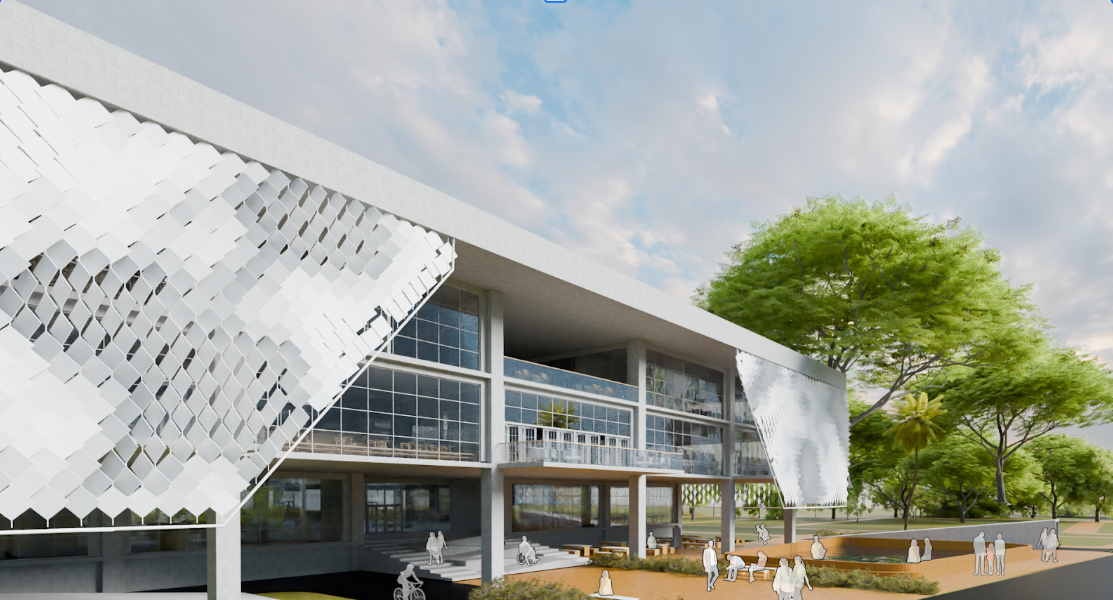
Re-envisioning Woodburn Govt. Public Library: Fostering Learning, Interaction & Collaboration
Student: Md Toki Tazwar
Site: Bogura
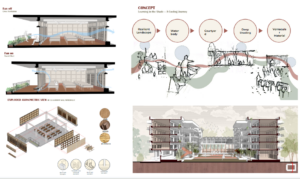
The project re-envisions Woodburn Government Public Library in Bogura as a contemporary learning and community hub, moving beyond the conventional concept of libraries as knowledge-storage spaces. It integrates informal public spaces, VR rooms, Makers’ and ML Labs, co-working and interactive learning facilities to encourage reading, collaboration, creativity and experiential learning. A climate-responsive façade further enhances indoor comfort, building aesthetics and material preservation, challenging the traditional library model in Bangladesh.
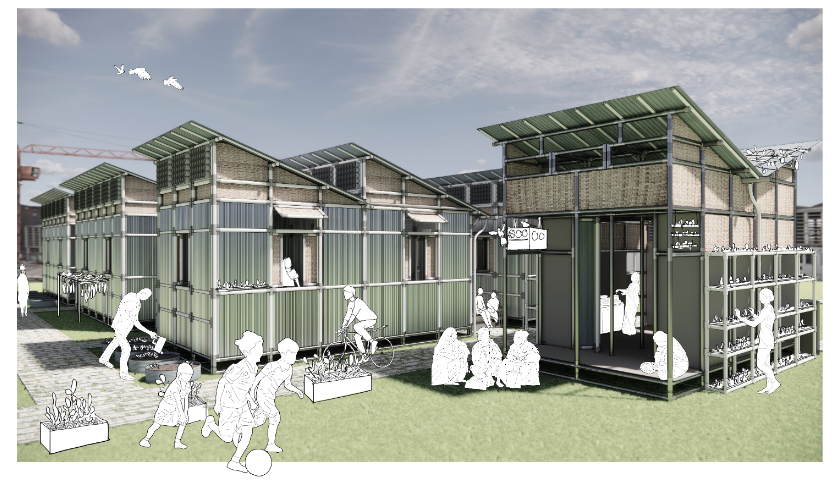
In-Between: T-Shelters for Urban Disaster Victims
Student: Sakib Nasir Khan
Site: Old Dhaka
This project addresses this hypothetical yet critical gap by proposing an efficient temporary and transitional sheltering (T-sheltering) system for up to two years in the Dhupkhola field, an urban open space. Designed to meet the needs of Sutrapur and Gendaria Thana residents, vulnerable Old Dhaka communities, the project integrates Old Dhaka’s unique socio-cultural practices and intangible heritage and the creation of therapeutic spaces for their swift recovery. The socio-cultural practices and relevant data are collected by field surveys and interviews. The design approaches to prepare the field to shelter people, instilling hope to recover quickly and restore its original function after the sheltering period ends. The design process begins with a clear assessment of the basic needs, constraints, and feasibility of global shelter standards for this high-density area. The clusters are designed using an algorithm, using the constraints as parameters, and further modified based on climatic considerations. Through thoughtful, context-sensitive design, it provides immediate shelter and helps the affected gradually get back to their daily routines. While tailored to a specific site, the proposed research methodology can be applied anywhere worldwide where population density is high and a rapid response is necessary after a disaster.
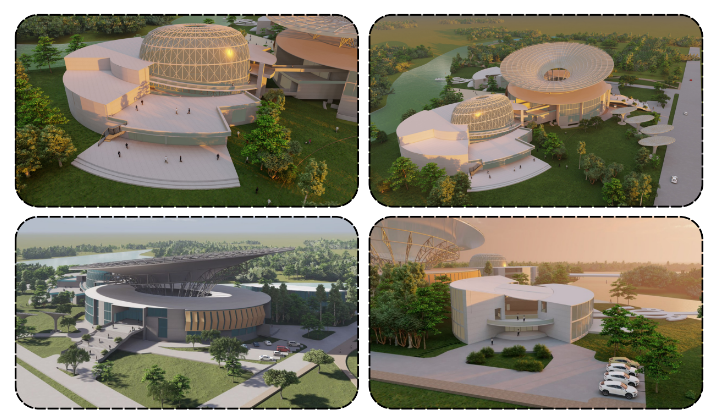
The Climate Interface: A Center for Environmental Research and Public Engagement
Student: Shahana Alam
Site: Jalshiri, Dhaka
The Climate Interface proposes a center for environmental research and public engagement, integrating interactive galleries, a biodiversity dome and dedicated research departments for water, horticulture and air quality. Through climate-responsive architecture, passive cooling, solar-powered shading and an innovative solar roof, the project promotes environmental awareness, scientific collaboration and sustainable living.
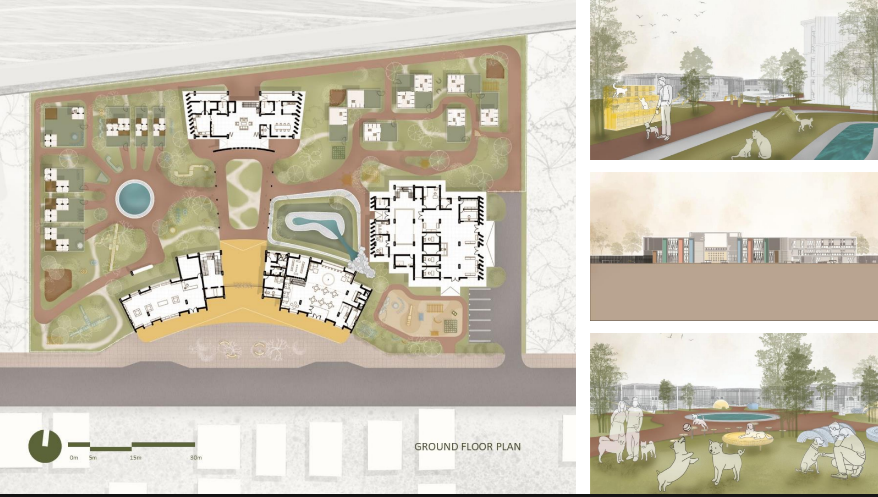
A Holistic Well-being Space for Rescued Cats & Dogs
Student: Mumtaha Tabassum Mumu
Site: Basundhara, Dhaka
Rehab & Rehome is an animal-centred rehabilitation and adoption facility designed for rescued cats and dogs. The project addresses the lack of comprehensive care environments for vulnerable animals by integrating rescue, medical treatment, recovery, socialization, adoption, and re-release within a single architectural framework. Rather than functioning as a conventional shelter, the facility is organized as a sequence of care, where spaces are planned according to behavioural needs, recovery stages, and species-specific requirements. Separate rehabilitation systems are developed for cats and dogs, while veterinary facilities, post-operative recovery units, caregiver accommodations, and service infrastructure support continuous twenty-four-hour care. Public functions, including a cat café, foster hotels, and awareness spaces, encourage community participation and strengthen human-animal relationships. By combining animal welfare, healthcare, and public engagement, the project demonstrates how architecture can support recovery, coexistence, and responsible rehoming while promoting a more compassionate urban environment.
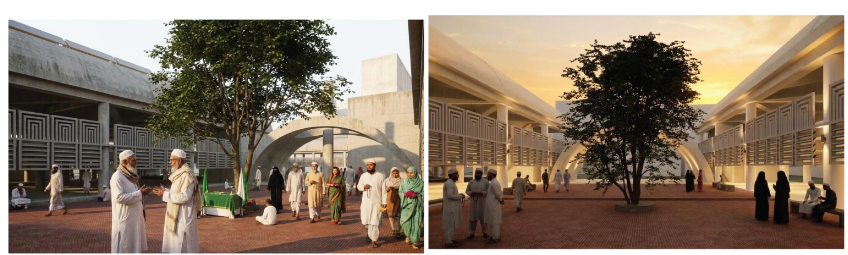
The Resonating Enclosure – An Architecture of Symbiosis at Azimpur Dayera Sharif
Student: Tanzid Noor Rafi
Site: Azimpur, Dhaka
The thesis reimagines Azimpur Dayera Sharif as an urban socio-spatial mediator, addressing the tension between Sufi communal values and Dhaka’s individualistic urbanism. By reclaiming underutilized land, the project seeks to revive the site’s cultural and spiritual heritage, fostering community interaction through spaces that promote communalism, knowledge and non-commercial values.
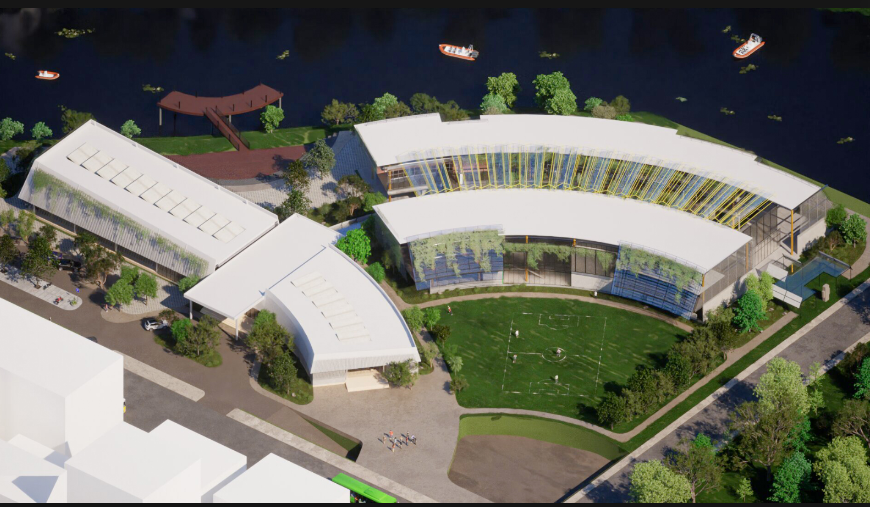
Place 2+3: Social Space for Young Professionals of Digital Culture
Student: Anik Abdullah Aman
Site: Purbachal, Dhaka
The project is a social hub for young adults aged 25-35, designed in response to the growing influence of digital culture on contemporary social life. The building functions as a hybrid of the “second place” and “third place,” combining coworking, leisure, and social gathering spaces while supporting both virtual and physical modes of interaction. A range of extroverted communal spaces and quiet, cozy spaces encourages active and passive forms of socialization. Biophilic design strategies promote wellbeing by integrating nature throughout the building, extending activities into landscaped outdoor areas, and blurring the boundary between interior and exterior spaces. The project creates a sense of place within Dhaka’s dense urban environment, offering an alternative setting for connection, relaxation, and community building.
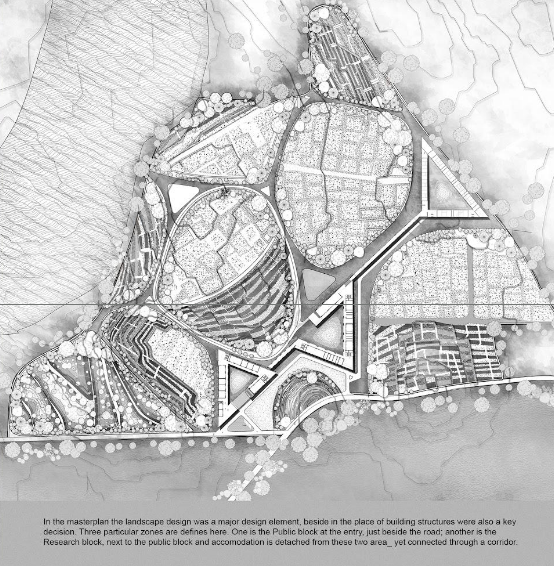
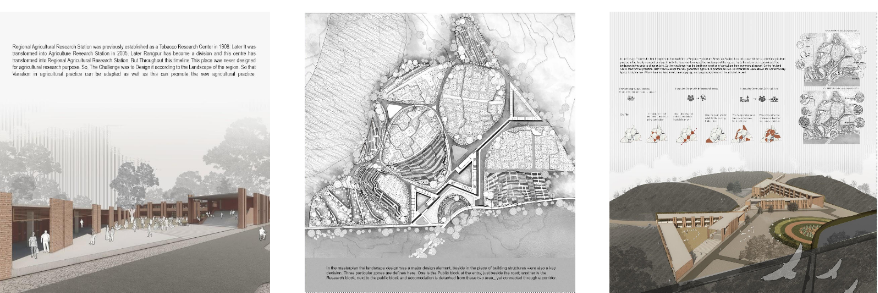
Tales of a Transforming Tillage : Redesigning a regional Agriculture Station,Burirhat, Rangpur
Student: Shunila Binte Ahsan
Site: Burirhat, Rangpur
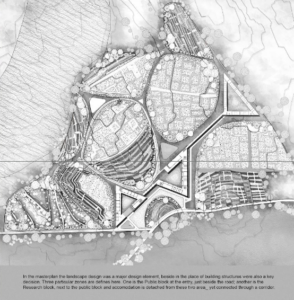
‘Tale of a Transforming Tillage’ redesigns the Regional Agricultural Research Station in Burirhat, Rangpur, shifting its legacy from a 1908 tobacco center into a modern 22nd-century facility. The design integrates regional topography with agricultural practices, allocating flat zones for traditional farming and sloped areas for contemporary systems like food forests, organic farming, and intercropping. The master plan balances public integration with scientific isolation, dividing the site into a public entry block, an accommodation zone, and a detached yet connected research sector. Architecturally, the low-profile brick structures utilize a climate-responsive north-south orientation arranged around a central community courtyard built for agricultural fairs. Functional programming includes specialized food engineering, irrigation, and machinery labs alongside comprehensive utility infrastructure like seed banks, fertilizer storage, and warehouses, successfully bridging the gap between local farmers and modern scientific research.
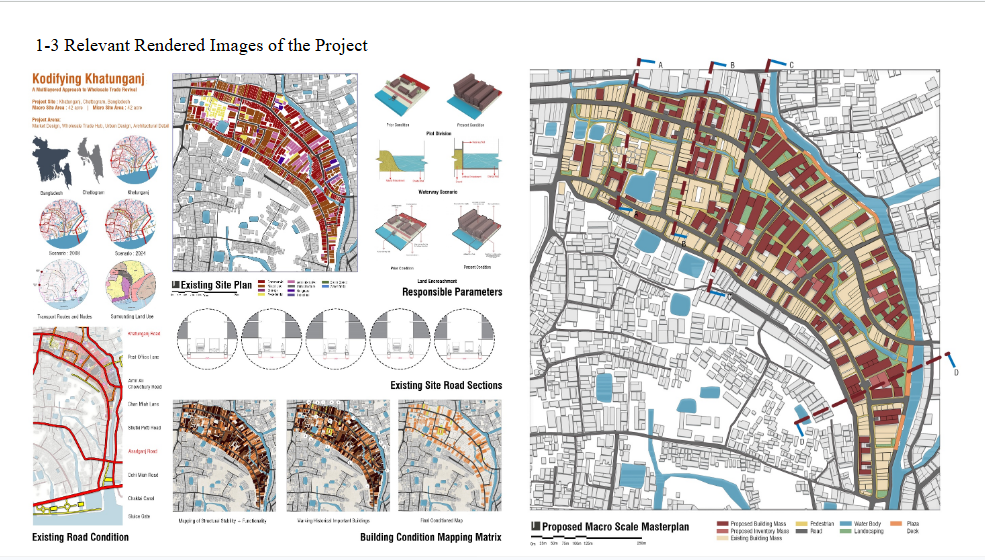
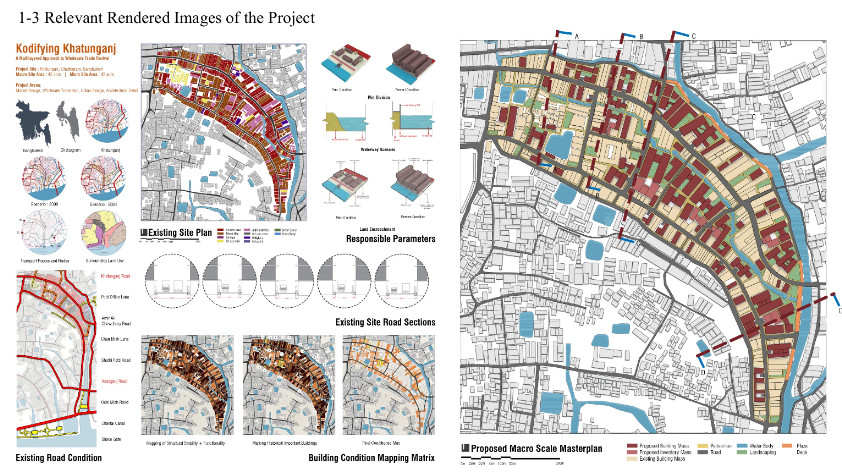
Kodifying Khatunganj: A Multilayered Approach to Wholesale Trade Revival
Student: Md. Akibur Rahman Sikder
Site: Khatunganj, Chittagong
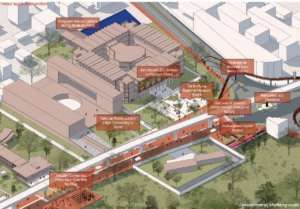
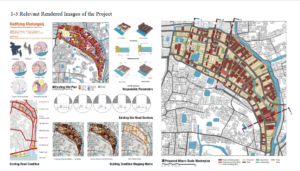
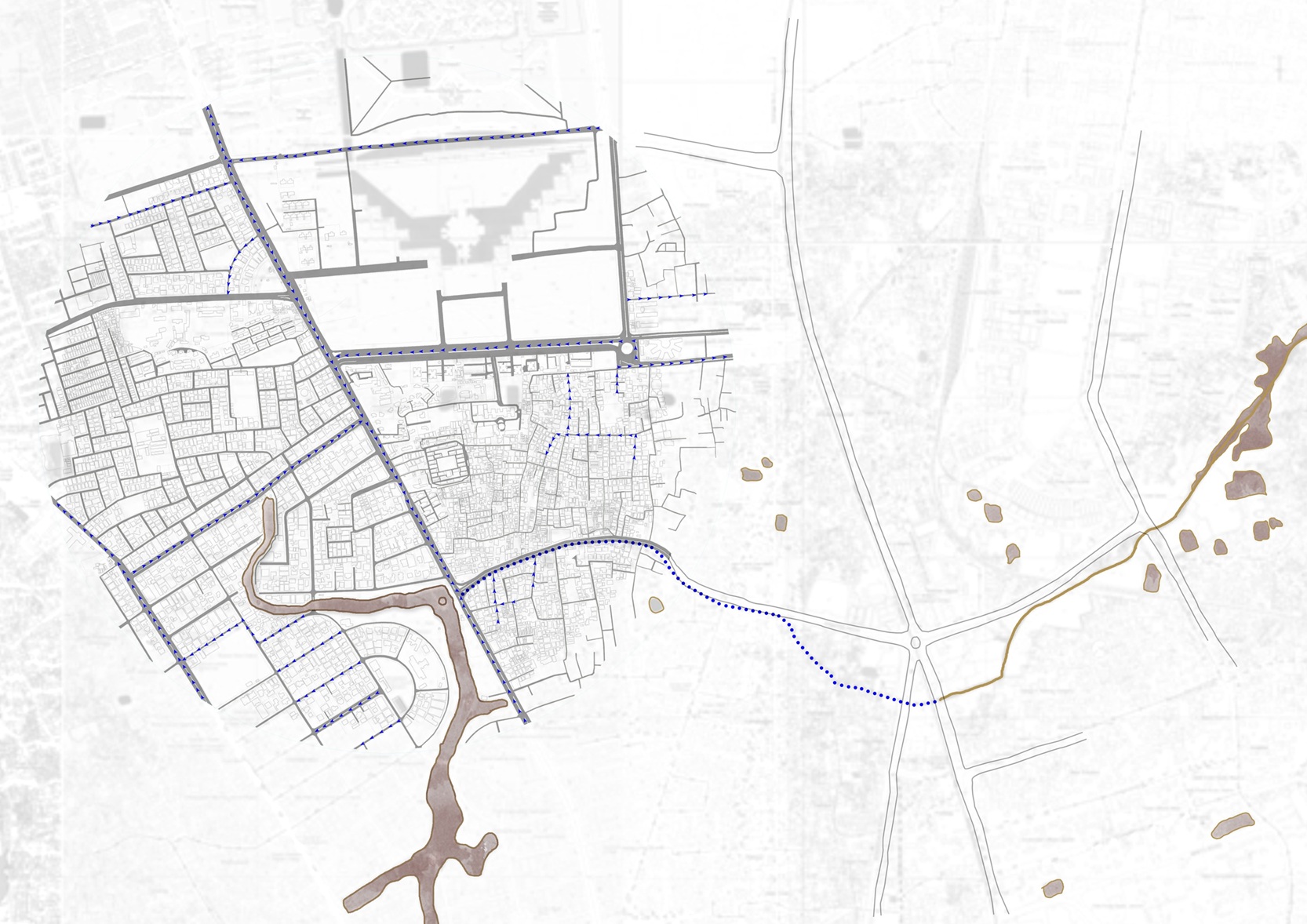
Khatunganj, a historic commercial hub along the Chattogram Chaktai Canal, has been a key player in Bangladesh’s wholesale trade due to its strategic location by the Karnaphuli River. However, years of unplanned development have caused critical issues, including waterway disruption, poor transport infrastructure, and inefficient goods handling, leading to economic decline and operational disruptions. This project proposes a multilayered strategy across macro, meso, and micro scales to address these challenges. At the macro level, it suggests enhancing road connectivity, creating alternative transport routes, and restoring the Chaktai Canal for flood management. The meso scale emphasizes pedestrian-friendly routes to boost market accessibility. On the micro scale, building conditions were assessed to identify deteriorating structures for targeted redevelopment. Broader plots are optimized with centralized storage and loading systems, while narrower plots incorporate in-shop storage with rear product access, maintaining active trading fronts. Additional measures include activating the canal front, improving fire safety, and preserving historical facades to rejuvenate Khatunganj’s vibrancy while honoring its legacy.
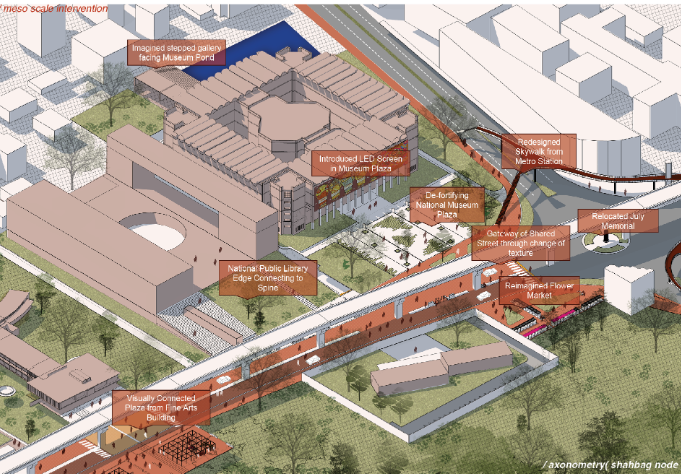
ECHOES OF RESISTANCE : Reimagining the Historic Axis of Shahbag–TSC–Shaheed Minar as a Civic Spine
Student: Shohini Talukder
Site: Shahabag, Dhaka
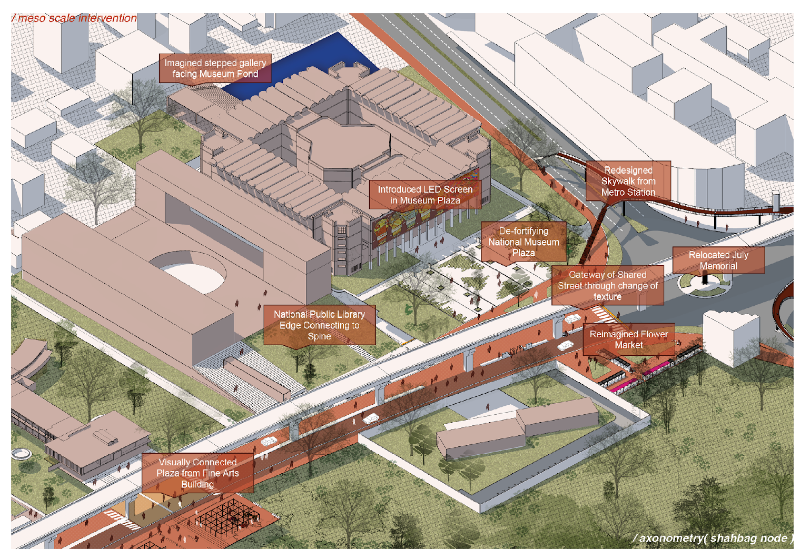
Urban spaces of socio-political significance are increasingly threatened by modernization that prioritizes vehicular efficiency over public life. In many post-colonial South Asian cities, this conflict reveals an opportunity to design for democratic expression. Shahbag–TSC–Shaheed Minar is a powerful case of such a civic axis, staging political movements and everyday rituals across scales in Dhaka. Despite its symbolic significance, the axis remains disconnected by pedestrian barriers, fortified institutional edges, and spatial incoherence, while spontaneous mass gatherings spill onto roads instead of public spaces, disrupting daily life. This project reimagines such an axis as a continuous cultural corridor, framing civic presence as a vital cultural practice of participation and shared identity. It uses literature, spatial analysis, and activity mapping to argue that for urbanism to be socially responsive, it needs to make memory and resistance part of the space itself.
Building Resilience: Reimagining School as Climate-Responsive Shelter for Heat-Vulnerable Region
Student: Sk. Sadia Afrin
Site: Gomostapur, Chapainawabganj
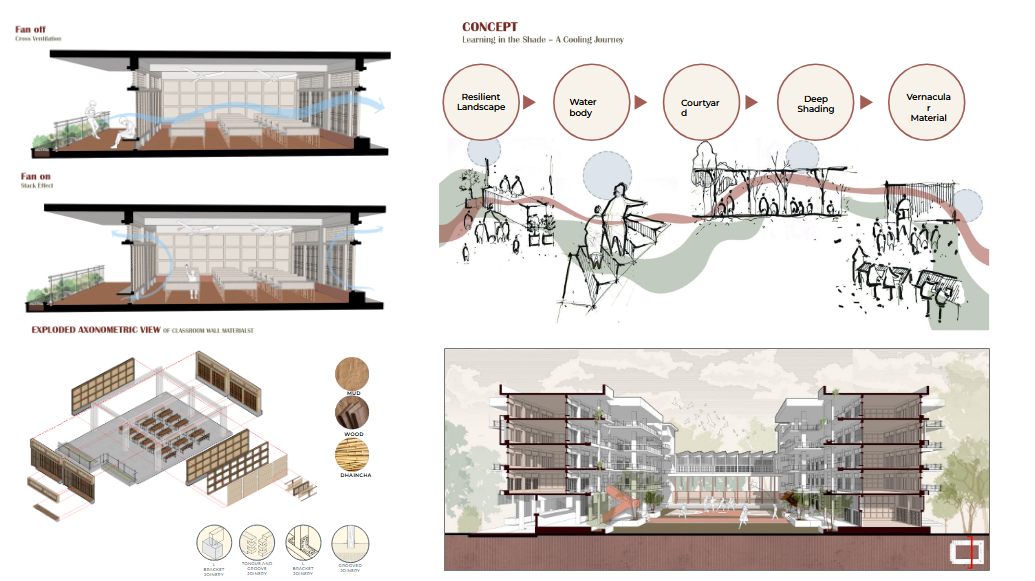
In northwestern Bangladesh, intensifying heat waves are disrupting education and endangering students’ health. Gomostapur Upazila of Chapainawabganj is a multi-hazard region affected by recurring heat waves, water stress, and seasonal flooding. Schools often shutdown here during peak summer. When open, extreme heat reduces attendance and increases the risk of heat stroke, affecting learning continuity. This project proposes a climate-responsive resilient school that functions as a thermal refuge. The design focuses on passive strategies such as optimized building orientation, form, and cross-ventilation to reduce indoor heat gain and improve comfort. A resilient landscape and rainwater harvesting system support microclimate improvement and groundwater recharge in a water-stressed context. Using local vernacular materials and construction system, the design ensures contextual and climatic responsiveness. The functional layout also enables the school to operate as a flood shelter during emergencies. Together, these strategies create a resilient learning environment that sustains education during extreme heat while strengthening community resilience.
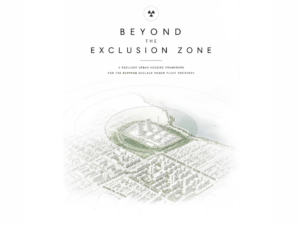
Beyond the Exclusion Zome
Student: Md Hasan Mahmud
Site: Ruppur, Pabna
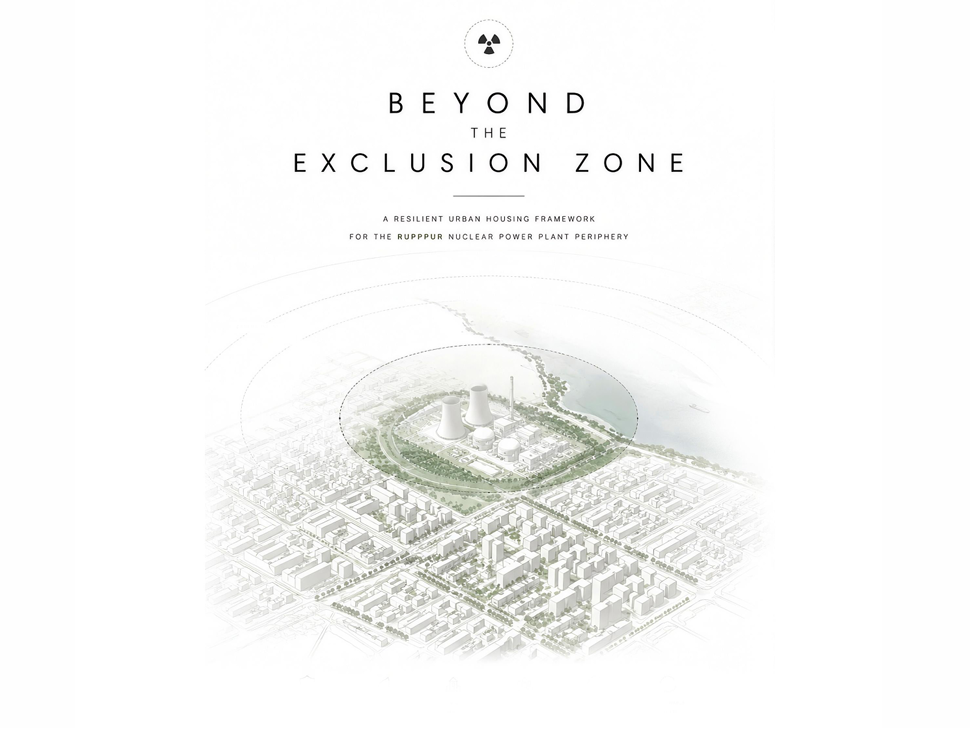
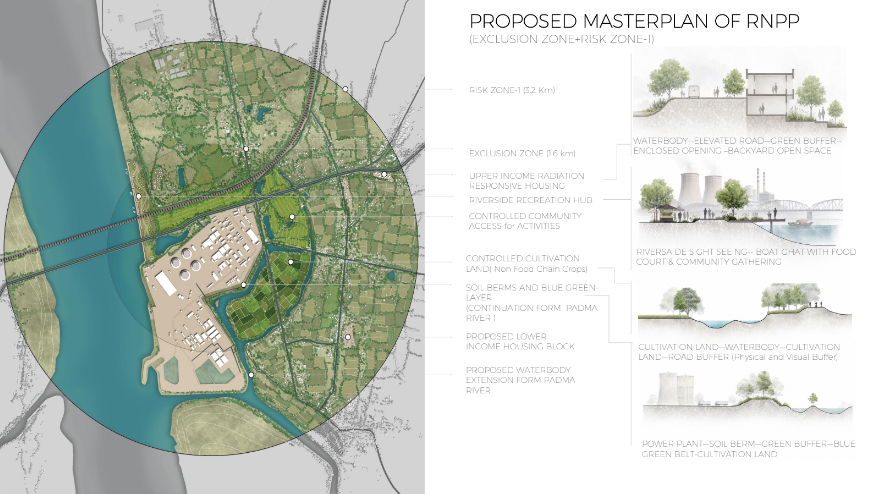
Beyond the Exclusion Zone proposes a resilient urban housing framework for communities living in the periphery of the Ruppur Nuclear Power Plant in Pabna. The project explores context-sensitive housing strategies that address the spatial, environmental and socio-economic challenges associated with living near a major nuclear infrastructure. Through resilient settlement planning, adaptive housing typologies and integrated community facilities, it envisions a safer, more inclusive and sustainable living environment while strengthening the long-term adaptability of the surrounding urban communities.
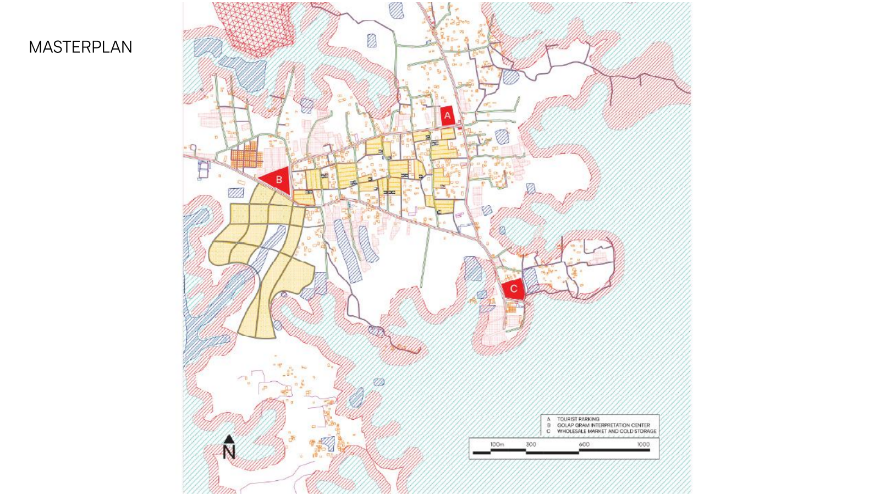
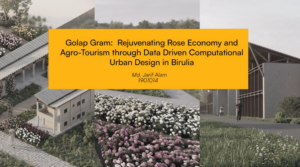
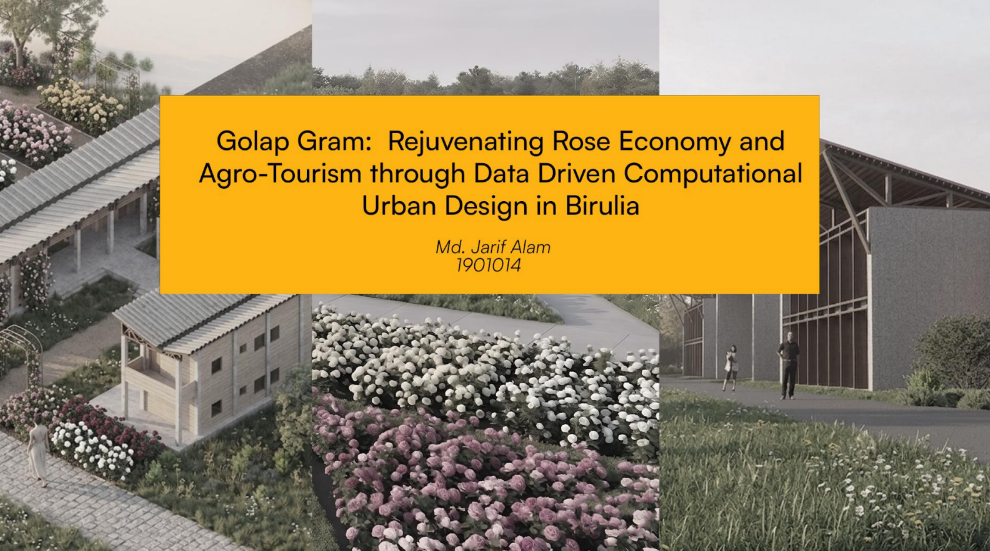
Golap Gram: Rejuvenating Rose Economy and Agrotourism through Data Driven Computational Urban Design
Student: Md Jarif Alam
Site: Birulia, Savar;
The project explores the revitalization of Birulia’s rose-growing economy through agrotourism and data-driven computational urban design. Using Sentinel-2 satellite imagery and indices such as NDVI, NDRE and MNDWI, it analyses vegetation health, agricultural patterns and water dynamics to inform spatial planning strategies that integrate rose cultivation, tourism and local livelihoods into a sustainable rural development framework.